Robotic Assisted Therapy
At Brunswick Private Hospital our focus is on innovation. We seek opportunities to integrate the latest technology into our programs, so that our patients achieve outcomes far beyond the industry standard.
Introducing Robotic-Assisted Upper Limb Rehabilitation
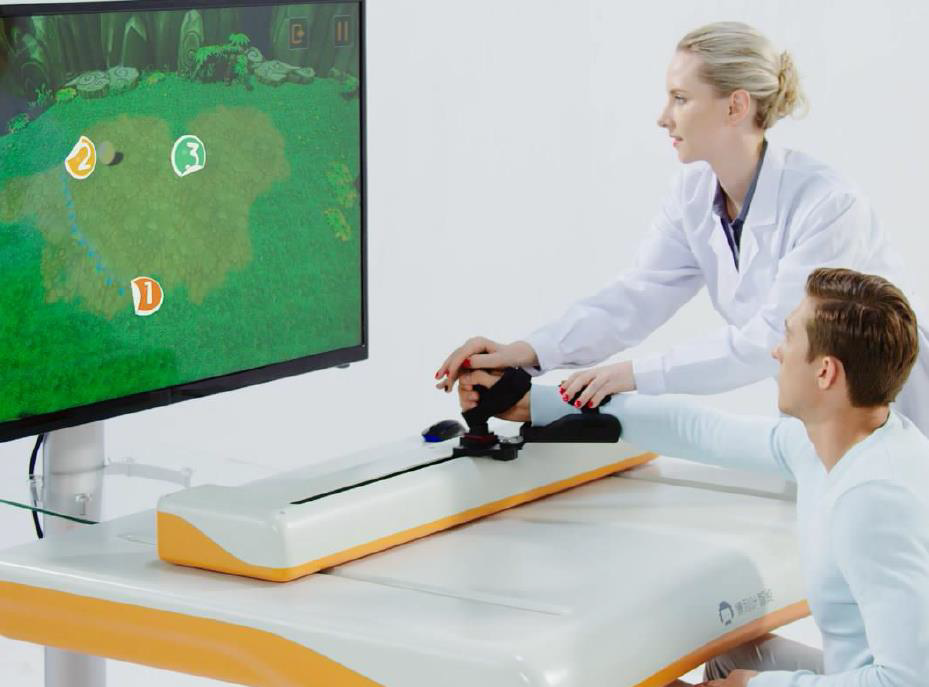
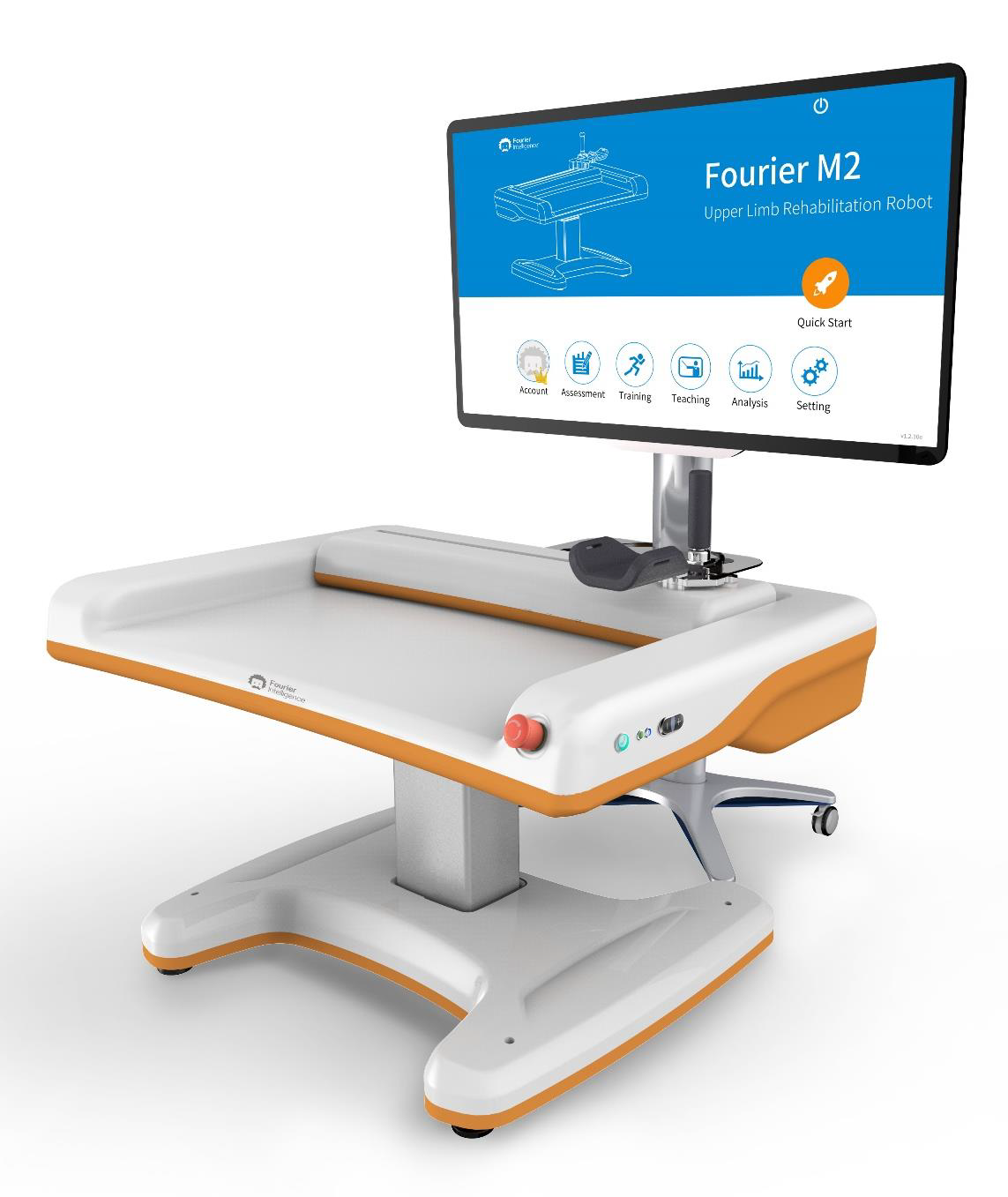
Brunswick Private Hospital is pleased to introduce the Fourier M2 Upper Limb Rehabilitation Robot—an advanced, next‑generation technology designed to enhance recovery for patients experiencing upper limb weakness or impairment following stroke, neurological injury, or other conditions affecting arm function.
This innovative system combines cutting-edge robotics, smart haptic feedback, and personalised therapy programming to deliver highly repetitive, precise, and measurable rehabilitation in a safe and engaging way. By integrating robotics into traditional therapy, the Fourier M2 helps patients relearn functional movement patterns with greater efficiency—supporting therapists while empowering patients to actively participate in their recovery journey.
A Smarter, More Personalised Approach to Recovery
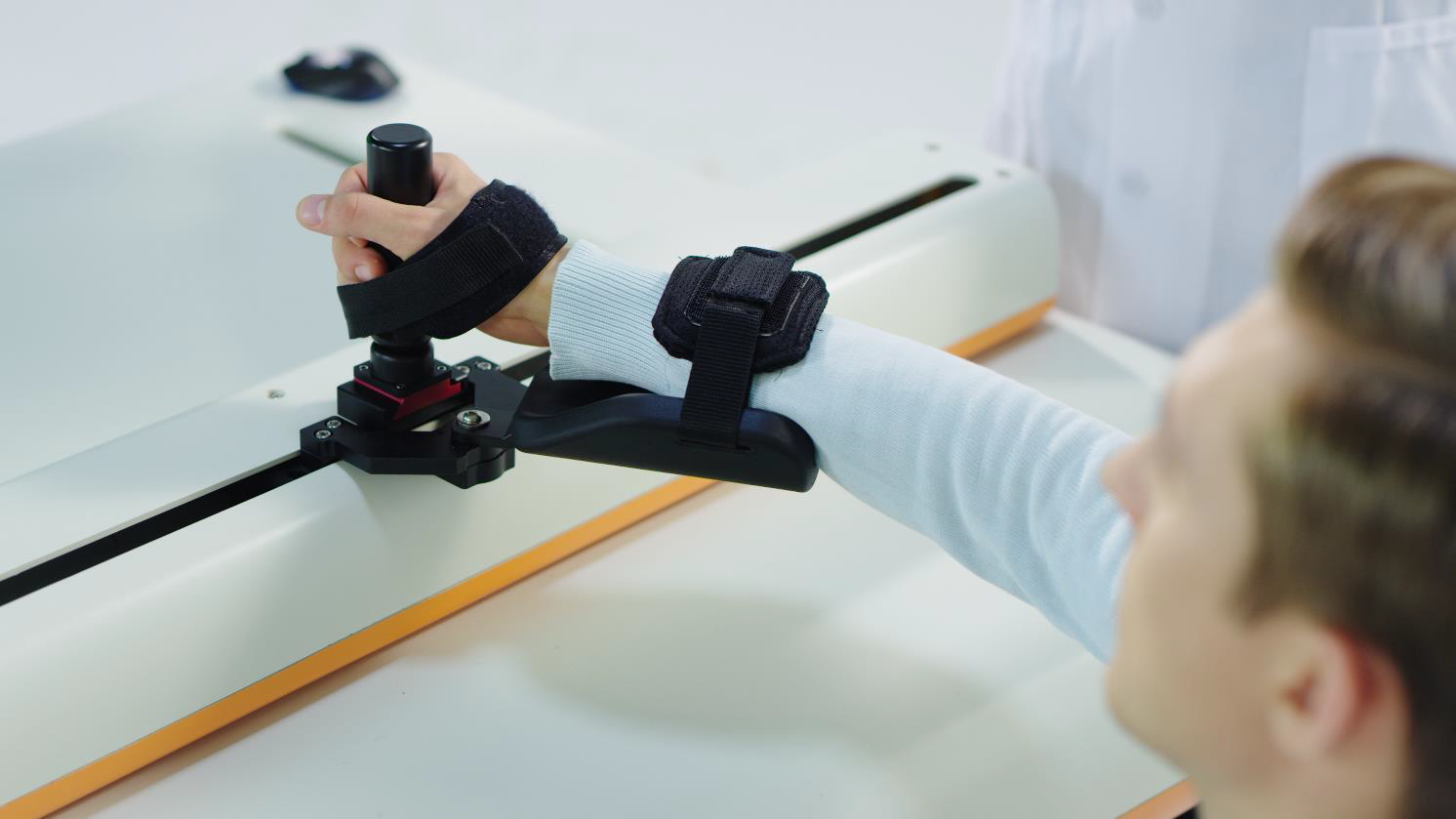
The Fourier M2 is built around a collaborative model: patient, therapist, and robot working together to achieve optimal rehabilitation outcomes. With the ability to sense and respond to a patient’s movement effort in real time, the system automatically adjusts support or resistance, ensuring each session is appropriately challenging and goal‑oriented.
Key features include:
- Haptic feedback technology that detects force, guides movement and adapts to the patient’s strength level.
- Four evidence-based training modes—Passive, Assistive, Active and Resistive—to support rehabilitation from early flaccid paralysis through to advanced strength recovery.
- Customised exercise programming, allowing therapists to design, record, and refine tailored movement pathways for each patient.
- Objective assessment and progress tracking, with comprehensive data captured after every session to help clinicians monitor improvements and adjust treatment plans.
- Multi-level safety protections, including spasm detection, emergency stop and controlled movement boundaries to ensure safety at all times.
Enhancing Therapy Through Repetition, Engagement and Measurable Outcomes
Rehabilitation science shows that high‑intensity, repetitive, task‑specific training is crucial for restoring motor function after neurological injury. The Fourier M2 supports this by delivering large volumes of high-quality movement practice—far beyond what is possible with manual therapy alone—while maintaining patient interest with visual and auditory feedback that reinforces progress.
By reducing the physical load on therapists and providing consistent, quantifiable results, this technology enhances the quality of care and creates a more engaging rehabilitation experience.
Frequently Asked Questions
What does robotic assisted therapy mean for my rehabilitation?
Robotic assisted therapy broadens the daily therapeutic routine of rehabilitation by training more intensively. It allows you to build on the foundations of traditional rehabilitation, develop ambition, achieve your goals and enjoy therapy.
What are patients across the Aurora Healthcare network saying about robotic assisted therapy?
Results and feedback from patients who have trialled robotics technology have been overwhelmingly positive.
One of our young stroke survivors reported that she was able to complete her exercises far more comprehensively on the robotic devices than during traditional therapy sessions. Another patient, living with multiple sclerosis, noted that she experienced significant benefit after just a couple of weeks using the technology.
Repetition plays a crucial role in rehabilitation, and patients consistently find that robotic therapy not only challenges them but also keeps them engaged. Integrated gaming and virtual reality elements further support motivation, helping patients stay focused on achieving their recovery goals.
How to access the program
Ask your General Practitioner or Specialist to refer you to our program.
The new robotics will be available to inpatients, day patients and outpatients, with those who are uninsured able to access a package of sessions, tailored to their individual needs.
Robotic therapy is also available to patients under the National Disability Insurance Scheme (NDIS) and other funding schemes.